

Влияние климата и антропогенной деятельности на качество воды рек в семиаридных регионах
Marzieh Mohammadi Aria ᵃ, Abbas Ali Ghezelsofloo b, Ben Jarihani c,d
a Кафедра почвоведения, Сельскохозяйственный колледж, Исфаханский технологический университет, Исфахан, Иран
b Исламский Азад университет Мешхеда, Мешхед, Иран
c Колледж естественных и технических наук, Университет Джеймса Кука, Таунсвилл, Австралия
d Центрально-Азиатский университет изучения окружающей среды и изменения климата (Green University), Ташкент, Узбекистан
https://doi.org/10.29258/CAJWR/2026-R1.v12-2/1-25.eng
*e-mail: ben.jarihani@jcu.edu.au
Тематический кластер: Водное право; Климат и окружающая среда
Тип статьи: Научная статья
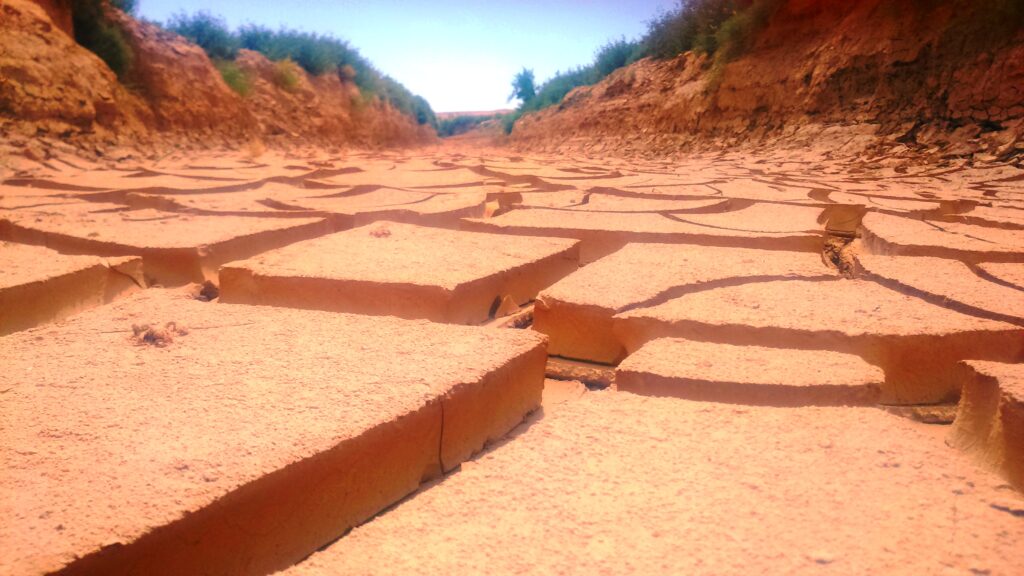
Photo: Wikimedia Commons
Аннотация
Деградация качества воды в речных экосистемах становится всё более серьёзной глобальной проблемой, которая обусловлена как антропогенной деятельностью, так и изменением климата. Река Кашафруд на северо-востоке Ирана является важнейшим источником водоснабжения для почти двух миллионов человек, однако испытывает возрастающее давление вследствие повышения температуры (~1,5° C за последние три десятилетия), неравномерного распределения осадков, участившихся засух и наводнений, сельскохозяйственного стока, промышленных сбросов и стремительной урбанизации. В настоящем исследовании анализируется долгосрочная динамика изменения ключевых показателей качества воды — электропроводности (ЭП), биохимического потребления кислорода (БПК) и химического потребления кислорода (ХПК) — за 13-летний период с использованием статистического моделирования и геопространственного картографирования. Анализ гидроклиматических условий выявил устойчивый рост температуры и сокращение количества осадков в пределах бассейна, что создаёт важный контекст для понимания деградации растительного покрова, расширения площадей оголённых земель и ухудшения качества воды. Результаты показывают, что уровень БПК увеличился на 20%, а ХПК — на 15%, что тесно коррелирует с климатической изменчивостью и усилением источников загрязнения. В соответствии с результатами других исследований был сделан вывод, что река Кашафруд подвергается значительному воздействию городских сточных вод, при этом объёмы загрязняющих веществ значительно превышают её естественную способность к самоочищению. Гидрологический мониторинг и мониторинг качества воды имеют важнейшее значение для управления загрязнением и защиты водопользователей, расположенных ниже по течению.
Полученные результаты подчёркивают острую необходимость разработки интегрированных стратегий управления водными ресурсами, которые будут сочетать в себе ужесточение нормативов промышленных сбросов, усиление контроля за сельскохозяйственным стоком и климатически устойчивое городское планирование. Демонстрируя, каким образом климатические и антропогенные факторы совместно приводят к ухудшению качества воды, данное исследование предлагает практические рекомендации по сохранению реки Кашафруд и вносит вклад в глобальное понимание вопросов управления пресноводными ресурсами в засушливых и полузасушливых регионах.
Доступно на английском
Download the article (eng)For citation:
https://doi.org/10.29258/CAJWR/2026-R1.v12-2/1-25.eng
References
Ahmed, T., M. Zounemat-Kermani and M. Scholz (2020). «Climate change, water quality and water-related challenges: a review with focus on Pakistan.» International journal of environmental research and public health 17(22): 8518.
Baygi, R. K., A. A. Ghezelsofloo, M. Eftekhari and M. Rastgoo (2023). «Journal of Drought and Climate change Research (JDCR).» Journal of Drought and Climate change Research (JDCR) 1(2): 27-40.
Change, I. P. O. C. (2007). «Climate change 2007: The physical science basis.» Agenda 6(07): 333.
Chen S., Kimirei I., Yu C., Shen Q., Gao Q. (2022). Assessment of urban river water pollution with urbanization in East Africa. Environmental Science and Pollution Research, 29. https://doi.org/10.1007/s11356-021-18082-1
Dehghani Darmian M., Schmalz B. (2023). Application of genetic programming in presenting novel equations for longitudinal dispersion coefficient in natural streams considering rivers geometry — Implementation in assimilation capacity simulation. Journal of Environmental Management, 340. https://doi.org/10.1016/j.jenvman.2023.117985
Ferreira, V., R. Albariño, A. Larrañaga, C. J. LeRoy, F. O. Masese and M. S. Moretti (2023). «Ecosystem services provided by small streams: an overview.» Hydrobiologia 850(12): 2501-2535.
Ghane, R., S. Motevalli, J. Ghobadi, G. Reza and M. Kouhi (2024). «Future Drought Characteristic in Kashaf Roud Basin Under SSPs Scenarios.» Nivar 48(126-127): 169-191.
Gholizade, V., A. Saffari, A. Ahmadabadi and A. Karam (2024). «Spatial analysis of aquifer vulnerability using DRASTIC, SI, GODS and SINTACS models,(Study area: Mashhad Plain aquifer-Northeast Iran).»
Gu X., Lin C., Wang B., Wang J., Ouyang W. (2022). A comprehensive assessment of anthropogenic impacts, contamination, and ecological risks of toxic elements in sediments of urban rivers: A case study in Qingdao, East China. Environmental Advances, 7. https://doi.org/10.1016/j.envadv.2021.100143
Huang C., Li Y., Lin C., Bui X., Vo T., Ngo H. (2023). Seasonal influence on pollution index and risk of multiple compositions of microplastics in an urban river. Science of The Total Environment, 859. https://doi.org/10.1016/j.scitotenv.2022.160021
Kolahi, M., K. Davary and H. Omranian Khorasani (2024). «Integrated approach to water resource management in Mashhad Plain, Iran: actor analysis, cognitive mapping, and roadmap development.» Scientific Reports 14(1): 162.
Liu B., Zhu X., Ding Q., Li P., Xi H., Li T., Luo H. (2025). Integrated retrieval of water quality parameters using UAV hyperspectral images and satellite imagery: Leveraging deep learning and attention mechanisms for precision. Ecological Indicators, 179. https://doi.org/10.1016/j.ecolind.2025.114191
Liu Y., Su B., Mu H., Zhang Y., Chen L., Wu B. (2023). Effects of point and nonpoint source pollution on urban rivers: From the perspective of pollutant composition and toxicity. Journal of Hazardous Materials, 460. https://doi.org/10.1016/j.jhazmat.2023.132441
Ma C., Sun W., Yang Z., Wang J., Zhou L. (2025). Spatiotemporal variations in land use impacts on river water quality in a mountain-to-plain transitional basin in arid region of northern China. Journal of Contaminant Hydrology, 271. https://doi.org/10.1016/j.jconhyd.2025.104542
Peng F., Pan C., Zhang M., Zhang N., Windfeld R., Salvito D., Selck H., Van den Brink P., Ying G. (2017). Occurrence and ecological risk assessment of emerging organic chemicals in urban rivers: Guangzhou as a case study in China. Science of The Total Environment, 589. https://doi.org/10.1016/j.scitotenv.2017.02.200
Pinto U., Dickens C., Babel M., Maheshwari B. (2024). Urban river health assessment and management. Managing Urban Rivers. https://doi.org/10.1016/B978-0-323-85703-1.00008-0
Pitton B., Dodge L., Gan J., Greco S., Haver D., Lee E., Majcherek T., Oki L. (2016). Comparison of pollutant concentrations from weekly discrete versus composite samples for residential dry-weather runoff. Journal of Environmental Management, 180. https://doi.org/10.1016/j.jenvman.2016.05.011
Puczko K., Jekatierynczuk-Rudczyk E. (2020). Extreme Hydro-Meteorological Events Influence to Water Quality of Small Rivers in Urban Area: A Case Study in Northeast Poland. Scientific Reports. https://doi.org/10.1038/s41598-020-67190-4
Rahman, M., M. M. Islam, H.-J. Kim, S. Sadiq, M. Alam, T. Siddiqua, M. A. Mamun, M. A. H. Gazi, M. R. Raju and N. Chen (2023). «Assessing the influence of land cover and climate change impacts on runoff patterns using CA-ANN model and CMIP6 data.» ISPRS International Journal of Geo-Information 12(10): 401.
Rakib M., Sarker A., Mejjad N., Islam A., Kumar R., Sharma P., Idris A. (2024). Spatiotemporal distribution, trophic transfer, and research uncertainty of heavy metals in a subtropical highly polluted Buriganga River: A critical review. Regional Studies in Marine Science, 69. https://doi.org/10.1016/j.rsma.2023.103327
Ranjbar, G., F. Kariminejad, J. Jamali, M. Shams, A. A. Najafpoor and A. Dehghan (2024). «Heavy metal concentration in water, soil and cultivated vegetables at the edge of Kashaf Roud River, Mashhad, Iran: Ecological risk assessment and bioaccumulation factor.» International journal of environmental analytical chemistry 104(15): 3602-3623.
Saatsaz, M. and A. Rezaei (2023). «The technology, management, and culture of water in ancient Iran from prehistoric times to the Islamic Golden Age.» Humanities and Social Sciences Communications 10(1): 1-22.
Shukla, A. K., C. Ojha, S. Shukla and R. Garg (2021). Water quality challenges in Ganga River Basin, India. The Ganga River Basin: A Hydrometeorological Approach, Springer: 1-19.
Soni, R., A. K. Pal, P. Tripathi, P. K. Jha and V. Tripathi (2022). «Physicochemical analysis of wastewater discharge and impact on Ganges River of major cities of North India.» Water Supply 22(6): 6157-6178.
Sousa, M. C., R. Martins, N. E. Simões and M. J. Feio (2025). «Ecosystem services of urban rivers: a systematic review.» Aquatic Sciences 87(1): 10.
Sun Y., Hu X., Li Y., Peng Y., Yu Y. (2021). A framework for deriving dispatching rules of integrated urban drainage systems. Journal of Environmental Management, 298. https://doi.org/10.1016/j.jenvman.2021.113401
Szewczyk, C. J., E. M. Smith and C. R. Benitez-Nelson (2023). «Temperature sensitivity of oxygen demand varies as a function of organic matter source.» Frontiers in Marine Science 10: 1133336.
Tajbakhshian, M. (2025). «Groundwater quality and hydrogeochemical challenges in the Sarakhs Plain, NE Iran: a call for sustainable management.» Environmental Geochemistry and Health 47(3): 75.
Taylor, K. G. and P. N. Owens (2009). «Sediments in urban river basins: a review of sediment–contaminant dynamics in an environmental system conditioned by human activities.» Journal of Soils and Sediments 9(4): 281-303.
Unep, A. and I. R. R. ASSESSMENT (2016). «The rise of environmental crime.» Nairobi: UNEP.
Vörösmarty, C. J., C. Pahl-Wostl, S. E. Bunn and R. Lawford (2013). «Global water, the anthropocene and the transformation of a science.» Current Opinion in Environmental Sustainability 5(6): 539-550.
Wang, H. and G. He (2022). «Rivers: Linking nature, life, and civilization.» River 1(1): 25-36.
Wang, M., B. L. Bodirsky, R. Rijneveld, F. Beier, M. P. Bak, M. Batool, B. Droppers, A. Popp, M. T. van Vliet and M. Strokal (2024). «A triple increase in global river basins with water scarcity due to future pollution.» Nature Communications 15(1): 880.
Yin H., Islam M., Ju M. (2021). Urban river pollution in the densely populated city of Dhaka, Bangladesh: Big picture and rehabilitation experience from other developing countries. Journal of Cleaner Production, 321. https://doi.org/10.1016/j.jclepro.2021.129040
Zhang Y., Yang Z. (2024). A multidirectional pairwise coupling approach with spectral features unmixing to quantify total phosphorus, total nitrogen, and chlorophyll-a in urban rivers. Journal of Hazardous Materials, 477. https://doi.org/10.1016/j.jhazmat.2024.135174
Zhou H., Wu T., Wang Z., Xu X., Ye M., Zhao Z. (2024). Environmental characteristics of antibiotics and antibiotic-resistance genes in the Suzhou River of Shanghai, China. Journal of Environmental Chemical Engineering, 12. https://doi.org/10.1016/j.jece.2024.112049
Zhou H., Ying T., Wang X., Liu J. (2016). Occurrence and preliminarily environmental risk assessment of selected pharmaceuticals in the urban rivers, China. Scientific Reports. https://doi.org/10.1038/srep34928
антропогенная нагрузка, деградация качества воды, изменение климата, интегрированное управление водными ресурсами, река Кашафруд