

Spatiotemporal variability of nitrogen and phosphorus in surface waters of the Western Tien Shan. (Kazakhstan)
Rabat Makhmutova a, Sofia Romanova a,
Aizada Serikova a, Yerkezhan Argynbayeva a,b
a RSE “Institute of Zoology” CS MSHE RK, 93 Al-Farabi Avenue, 050060, Almaty, Kazakhstan
b Al-Farabi Kazakh National University, Faculty of Biology and Biotechnology, 71 Al-Farabi Avenue, Almaty, 050040, Kazakhstan
https://doi.org/10.29258/CAJWR/2026-R1.v12-2/43-74.rus
*e-mail: rabat.makhutova@zool.kz
Thematic cluster: Climate & Environment; Water Government & Law
Type of paper: Research paper
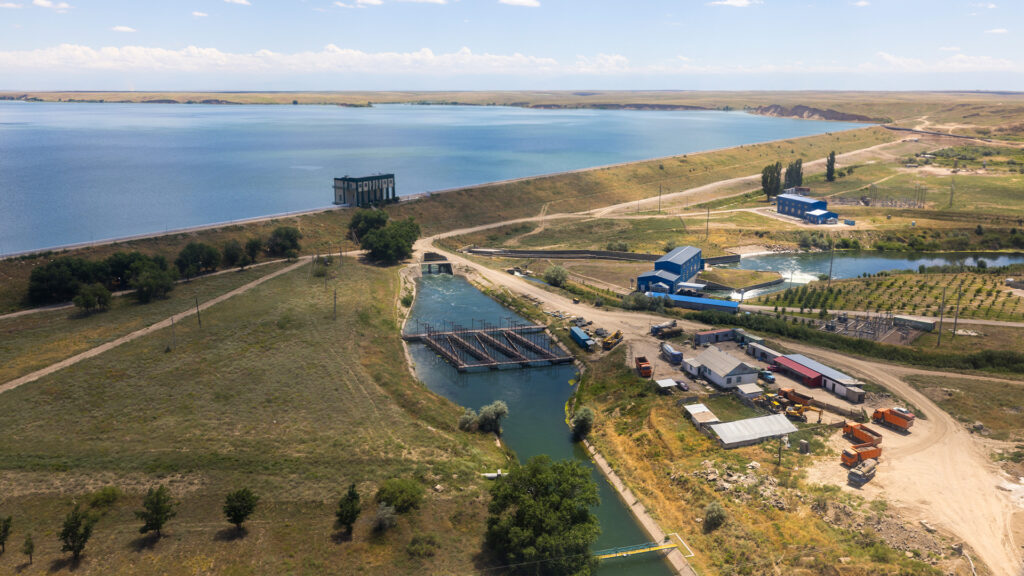
Photo: primeminister.kz.
Аннотация
This article presents data on the distribution of various forms of mineral nitrogen and phosphorus in water sources of Southeastern Kazakhstan for the period from 2014 to 2023. It was found that the content and ratio of mineral nitrogen forms varied. Among nitrogen compounds, nitrates predominated, accounting for 82–86% of the total nitrogen. However, no exceedances of the maximum permissible concentrations (MPC) for water bodies of fishery importance were detected. Ammonium and nitrite nitrogen accounted for 12–17% and 0.8–2.1% of the total nitrogen, respectively. Nevertheless, exceedances of their MPC by 1.2 to 3.0 times were observed in almost all seasons. Dissolved mineral phosphorus (phosphate ions) was detected in water at all surveyed locations in low concentrations (0.005–0.0400 mg/dm³) due to the low solubility of its compounds and intensive uptake by aquatic organisms. The most polluted areas were the tributaries of the Tasotkel Reservoir: the Shu River (near the village of Kainar) and the Toktash River. A decrease in the concentration of nitrogen and phosphorus compounds was observed from the upper to the lower reaches of the Shu River. Self-purification of the Shu River’s water masses was noted for all compounds: phosphorus (57.8%), nitrite nitrogen (49.0%), ammonium nitrogen (35.9%), and nitrate nitrogen (15.6%). Over the study period, based on average annual concentrations of nitrogen and phosphorus compounds, the water quality of all observed sites corresponded to class 1–3, with occasional seasonal drops to class 5.
Available in Russian
Download the article (rus)For citation:
Makhmutova, R., Romanova, S., Serikova, A., & Argynbayeva, Y. (2026). Spatiotemporal variability of nitrogen and phosphorus in surface waters of the Western Tien Shan.Central Asian Journal of Water Research, 12(2), 43–67. https://doi.org/10.29258/CAJWR/2026-R1.v12-2/43-74.rus
References
Alekin O.A. (1970). Osnovy gidrohimii. [Fundamentals of hydrochemistry]. – L.: Gidrometeoizdat, – 444 s. [in Russian]
Amirgaliev N.A., Mұsaқұlқyzy A., Madibekov A.S., Ismuhanova L.T., Sultanbekova B.M. (2024). Mnogoletnjaja dinamika transgranichnogo pritoka biogennyh soedinenij po reke Ile i ego transformacija po techeniju reki [The long-term dynamics of the transboundary inflow of biogenic compounds along the Ila River and its transformation along the river]. Gidrometeorologija i jekologija. – Hydrobiology and ecology. – №2. – S. 57–66. [in Russian]
Atanazarov K.M. (1999) Jekologicheskaja rol’ biogennyh jelementov poverhnostnyh vod nizov’ev Amudar’i v uslovijah antropogennogo pressa. [The ecological role of biogenic elements of the surface waters of the lower reaches of the Amu Darya in the conditions of anthropogenic pressure]: Avtopef. dic. … kand. biol. nauk. – Tashkent, – 23 c. [in Russian]
Beremzhanov B.A., Akkoshkarov O.A, Ibragimova M.A., Romanova S.M. (1973). K voprosu fiziko-himicheskoj harakteristiki vody rek Dzhambulskoj oblasti. [On the issue of physico-chemical characteristics of the water of the rivers of the Dzhambul region]. Himija i himicheskaja tehnologija. – Chemistry and Chemical Technology. – Alma-Ata. – Vyp. 14. – S. 189–198. [in Russian]
Bespamjatnov G.P., Krotov Ju.A. (1985) Predel’no dopustimye koncentracii himicheskih veshhestv v okruzhajushhej srede. [Maximum permissible concentrations of chemicals in the environment]. Spravochnik. – Guide. – L.: Himija. – 528 s. [in Russian]
Bjuro nacional’noj statistiki Agentstva po strategicheskomu planirovaniju i reformam Respubliki Kazahstan, 2023. [Bureau of National Statistics of the Agency for Strategic Planning and Reforms of the Republic of Kazakhstan, 2023]. https://stat.gov.kz/ru/region/zhambyl [in Russian]
Burlibaev M.Zh., Kajdarova R.K., Burlibaeva D.M., Shenberger K.M., Kulebaev Sh.U. (2019). O sovremennom sostojanii izmenenija gidrohimicheskogo rezhima reki Shu. [On the current state of changes in the hydrochemical regime of the Shu River]. Gidrometeorologija i jekologija. Vyp 2(93). – Hydrometeorology and ecology. – S.64–79. [in Russian]
Burlibaev M.Zh., Murtazin E.Zh., Iskakov N.A. (2003). Biogennye veshhestva v osnovnyh vodotokah Kazahstana. [Biogenic substances in the main watercourses of Kazakhstan]. – Almaty: Kaganat. – 723 s. [in Russian]
*Byrnes D.K., Van Meter K.J., Basu N.B. (2020) Long-Term Shifts in U.S. Nitrogen Sources and Sinks Revealed by the New TREND-Nitrogen Data Set (1930–2017) // Global Biogeochemical Cycles. – V.34. – Issue 9. 08.24. https://doi.org/10.1029/2020GB006626
Charykov A.K. (1984) Matematicheskaja obrabotka rezul’tatov himicheskogo analiza. [Mathematical processing of chemical analysis results]. – L.: Himija. – 168 s. [in Russian]
Dzhumanijazova Sh.I., Mambetullaeva S.M., Komilzhonova S.H., Rozmetova B.O. (2022) Jekologicheskie uslovija funkcionirovanija vodnyh jekosistem Horezmskoj oblasti Uzbekistana [Ecological conditions of functioning of aquatic ecosystems of Khorezm region of Uzbekistan]. Universum: himija i biologija. – Universum: chemistry and biology №9–1 (99). – C. 32–37. URL: https://cyberleninka.ru/article/n/ekologicheskie-usloviya-funktsionirovaniya-vodnyh-ekosistem-horezmskoy-oblasti-uzbekistana (data obrashhenija: 09.04.2025). [in Russian]
Fomin G.S. (1995) Voda. Kontrol’ himicheskoj, bakterial’noj i radiacionnoj bezopasnosti po mezhdunarodnym standartam. [Water. Chemical, bacterial and radiation safety control according to international standards]. Jenciklopedicheskij spravochnik. – The Encyclopedic reference – M.: NPO «Al’ternativa». – 618 s. [in Russian]
Halder B.R., Barthakur N.P. (1976) Sulpihide production in some typical rice Soils of Assam // J.Imdian Soc. Soil. Sci. – Vol. 24, № 4. – Р. 387–395.
Harina S.G., Kolesnikova T.P. (2009) Dinamika soderzhanija biogennyh jelementov v vode vodohranilishh agrolandshafta v Amurskoj oblasti. [Dynamics of the content of biogenic elements in the water reservoirs of the agricultural landscape in the Amur region]. Vestnik KrasGAU. –Bulletin of the Krasnoyarsk State University№11. – C. 120–126. URL: https://cyberleninka.ru/article/n/dinamika-soderzhaniya-biogennyh-elementov-v-vode-vodohranilisch-agrolandshafta-v-amurskoy-oblasti. (data obrashhenija: 09.04.2025). [in Russian]
Informacionnyj bjulleten’ o sostojanii okruzhajushhej sredy. Vypuski s 2014 po 2023 gg. [ Information bulletin on the state of the environment. Issues from 2014 to 2023]. – Astana: Departament jekologicheskogo monitoringa MJePR RK Kazgidromet, 2014–2023 gg. [in Russian]
Gosudarstvennyj vodnyj kadastr Respubliki Kazahstan. Bjulleten’» Poverhnostnye vody sushi. Katalozhnye dannye. [The State Water Cadastre of the Republic of Kazakhstan. Bulletin ” Surface waters of the land. Catalog data”]. – Astana: Kazgidromet, 2014–2023 gg. [in Russian]
Gosudarstvennyj standart Respubliki Kazahstan Voda pit’evaja Obshhie trebovanija k organizacii i metodam kontrolja kachestva ST RK GOST R 51232 (2003). [State standard of the Republic of Kazakhstan. Drinking water. General requirements for the organization and methods of quality control ST RK GOST R 51232 (2003)]. https://files.stroyinf.ru/Data2/1/4293739/ 4293739359.pdf [in Russian]
Gosudarstvennyj standart Respubliki Kazahstan. Voda pit’evaja. Otbor prob. ST RK GOST R 51593 (2003) [State standard of the Republic of Kazakhstan. Drinking water. Sampling. ST RK GOST R 51593 (2003)]. https://online.zakon.kz/Document/?doc_id= 30015917&pos=22; -46#pos= 22; -46 [in Russian]
Edinaja sistema klassifikacii kachestva vody v vodnyh ob#ektah. Prikaz Predsedatelja Komiteta po vodnym resursam Ministerstva sel’skogo hozjajstva Respubliki Kazahstan ot 9 nojabrja 2016 goda № 151. Zaregistrirovan v Ministerstve justicii Respubliki Kazahstan 13 dekabrja 2016 goda № 14513. [A unified system for classifying water quality in water bodies. Order of the Chairman of the Committee on Water Resources of the Ministry of Agriculture of the Republic of Kazakhstan dated November 9, 2016 № 151. Registered with the Ministry of Justice of the Republic of Kazakhstan on December 13, 2016 № 14513]. [in Russian]
Esembekova G.B., Esengeldieva L.K. (2019) Vodnyj i solevoj rezhim serozemnyh pochv juga Kazahstana. [ Water and salt regime of gray-earth soils of the South of Kazakhstan]. Juzhno-Kazahstanskij gosudarstvennyj universitet im. M. Auezova. – South Kazakhstan State University named after M. Auezov– g. Shymkent. – 180 s. [in Russian]
Kalinin, M.Ju. (2001) Vodnye resursy Belorusskogo Poles’ja: ispol’zovanie i ohrana/ M.Ju. Kalinin, A.A. Volchek [Water resources of the Belarusian Polesie: use and protection]. Prirodnye resursy: Mezhvedomstvennyj bjulleten’. – Natural Resources: Interagency Bulletin. – 4. – S. 35–49. [in Russian]
Kornjuhova O.V. (2020) Monitoring i ocenka kachestva poverhnostnyh vod [Monitoring and assessment of surface water quality]. Sbornik statej, posvjashhennyj 100-letiju so dnja obrazovanija Gidrohimicheskogo instituta, «Sovremennye problemy gidrohimii i monitoringa kachestva poverhnostnyh vod». Chast’ 1. – Collection of articles dedicated to the 100th anniversary of the establishment of the Hydrochemical Institute, “Modern problems of hydrochemistry and monitoring of surface water quality” Part 1. – Rostov-na-Donu. – S. 155–160. [in Russian]
Krupa E.G. (2012) Zooplankton limnicheskih i loticheskih jekosistem Kazahstana. Struktura, zakonomernosti formirovanija. [Zooplankton of limnic and lothian ecosystems of Kazakhstan. Structure, patterns of formation]. – Saarbrucken: Palmarium Academic Publishing. – 346 s. [in Russian]
*Krupa E.G., Romanova S.M. (2017). Gidrohimija vodoemov bassejna reki Arys’ na territorii Juzhno-Kazahstanskoj oblasti [Hydrochemistry of reservoirs of the Arys river basin in the South Kazakhstan region]. Izvestija NAN RK. Serija geologii i tehnicheskih nauk. – Proceedings of the National Academy of Sciences of the Republic of Kazakhstan. Series of Geology and Technical Sciences–T.4. – № 424. – S. 77–89. [in Russian]
*Krupa E.G., Barinova S.S., Romanova S.M. (2019) Environmental mapping in assessing the impact of environmental factors on the aquatic ecosystem of the Arys River basin, South Kazakhstan // Diversity. – 11(12). – P. 1–16. 239 (Q2 2019)
Kuznecov S.I. (1970) Mikroflora ozer i ee geohimicheskaja dejatel’nost’. [Microflora of lakes and its geochemical activity]. – L.: Nauka LO. – 440 s. [in Russian]
Mamatkanov D.M., Bazhanova L.V., Romanovskij V.V. (2006) Vodnye resursy Kyrgyzstana na sovremennom jetape. [Water resources of Kyrgyzstan at the present stage]. – Bishkek: Ilim. – 276 s. [in Russian]
Matveeva I.V., Uralbekov B.M., Abishev T.B., Al’kenova G.T., Burkitbaev M.M. (2010) Himicheskaja harakteristika prirodnyh vod doliny reki Shu [Chemical characterization of the natural waters of the Shu River Valley]. Vestnik KazNU serija himicheskaja. – Bulletin of the Kazakh State University chemical series. – 2(58). – S. 238–244. [in Russian]
Metodicheskie rekomendacii po primeneniju edinoj sistemy klassifikacii kachestva vody v vodnyh ob#ektah Respubliki Kazahstan/ Utverzhdena Prikazom Predsedatelja KVR MSH RK ot 9.11.2016 g. №151. [Methodological recommendations on the application of the unified system of classification of water quality in water bodies of the Republic of Kazakhstan/ Approved by the order of the Chairman of the Committee of Water Resources of the Ministry of Agriculture of the Republic of Kazakhstan dated 9, 11, 2016. №151]. [in Russian]
Mustafaev Zh. (2023) Landshaftno-jekologicheskoe rajonirovanie bassejna reki Shu. [Landscape and ecological zoning of the Shu River basin]. Gidrometeorologija i jekologija. – Hydrobiology and ecology – (4). – S. 17–28. [in Russian]
Mustafaev Zh.S., Kozykeeva A.T., Kamaliev A.M. (2019) Klimaticheskij profil’ vodosbornogo bassejna reki Shu. [Climatic profile of the Shu River catchment area]. Gidrometeorologija i jekologija. – Hydrobiology and ecology. № 2 (93). – S. 41–54. [in Russian]
Muhamedzhanov M.A., Tleuova Zh.T. (2024) Jekologicheskie problemy i zagrjaznenie pit’evyh podzemnyh vod Juzhnogo Kazahstana [Environmental problems and pollution of drinking groundwater in South Kazakhstan]. Vodnye resursy. – Water resources – Almaty. T. 28. – 135 s. [in Russian]
Nacional’nyj doklad o sostojanii okruzhajushhej sredy i ob ispol’zovanii prirodnyh resursov Respubliki Kazahstan za 2023 god. [The National Report on the state of the environment and on the use of natural resources of the Republic of Kazakhstan for 2023]. https://ecogosfond.kz/orhusskaja-konvencija/dostup-k-jekologicheskoj-informacii/jekologijaly-zha-daj/r-orsha-an-ortany-zhaj-k-ji-turaly-ltty-bajandamalar/ [in Russian]
Nikanorov A.M. (2008) Gidrohimija. – Izd. 3-e, pererab i dopoln. – Hydrochemistry. Edition 3, revised and expanded. – SPb.: Gidrometeoizdat. – 462 s. [in Russian]
Nikanorov A.M. (2011) Regional’naja gidrohimija. [Regional hydrochemistry]. – Rostov-na-Donu: Izd-vo NOK. – 389 s. [in Russian]
Nikanorov A.M., Bryzgalo V.A., Reshetnjak O.S. (2012) Reki Rossii v uslovijah chrezvychajnyh jekologicheskih situacij. [Russian rivers in environmental emergencies]. – Rostov-n/D.: Izd-vo «NOK». – 310 s. [in Russian]
Metodicheskie rekomendacii po kompleksnoj ocenke kachestva poverhnostnyh vod po gidrohimicheskim pokazateljam / Pod red. M.Zh. Burlibaeva. [Methodological recommendations for a comprehensive assessment of surface water quality by hydrochemical indicators / Ed. by M.J. Burlibaev]. – Astana, 2012. – 80 s. [in Russian]
Reshetnjak O.S. (2015) Jekologicheskie posledstvija himicheskogo zagrjaznenija rechnyh jekosistem Evropejskoj territorii Rossii [Ecological consequences of chemical pollution of river ecosystems of the European territory of Russia]. Chistaja voda Rossii-2015: 248 sb. mat. XIII mezhdunarodnogo simpoziuma i vystavki «Chistaja voda Rossii». – Clean Water of Russia-2015: 248 collection of materials of the XIII International Symposium and exhibition “Clean Water of Russia”. – Ekaterinburg: Izd-vo FGUP RosNIIVH. – S. 276-281. [in Russian]
Romanova S.M., Ljashenko L.V., Kajdarova R.K. (1986) Ocenka kachestva poverhnostnyh vod Juzhnogo Kazahstana [Assessment of surface water quality in Southern Kazakhstan]. V kn.: Fiziko-himicheskie osnovy pererabotki mineral’nogo syr’ja Kazahstana. – Physico-chemical bases of processing of mineral raw materials of Kazakhstan. Alma-Ata. – S. 59–65. [in Russian]
Romanova S.M., Tursunova A.A. (2010). K voprosu o samoochishhajushhej sposobnosti rechnyh vod Kazahstana [On the issue of the self-cleaning ability of Kazakhstan’s river waters]. Gidrometeorologija i jekologija. – Hydrobiology and ecology. № 2(57). – S. 67–77. [in Russian]
Romanova S.M., Krupa E.G., Serikova A.S. (2024). Soedinenija azota i fosfora v vodnyh ob#ektah kazahstanskoj chasti bassejna r. Irtysh [Nitrogen and phosphorus compounds in the water bodies of the Kazakh part of the Irtysh River basin]. Vestnik KazNU Serija jekologicheskaja. – Bulletin of the Kazakh State University ecologycal series. №2 (79). – S. 21–31. https://doi.org/10.26577/EJE.2024.v79.i2-02 [in Russian]
Sejtkaziev A.S., Majmakova A.K. (2020) Jekologicheskaja ocenka issleduemogo uchastka serozemnyh pochv Zhambylskoj oblasti [Ecological assessment of the studied area of gray-earth soils of Zhambyl region]. Vestnik Universiteta Shakarima. Serija tehnicheskie nauki. – Bulletin of Shakarim University. Technical Sciences Series. 3(91). – S. 281–285. [in Russian]
Semenov A.D. (1977) Rukovodstvo po himicheskomu analizu poverhnostnyh vod sushi. [Guidelines for the chemical analysis of land surface waters]. – L.: Gidrometeoizdat. – 541 s. [in Russian]
Shashulovskaja E.A., Mosijash S.A., Filimonova I.G., Grishina L.V. (2020) Osobennosti gidrohimicheskogo rezhima Iriklinskogo vodohranilishha (na r. Ural) v razlichnye po vodnosti gody [Features of the hydrochemical regime of the Iriklinsky reservoir (on the Ural River) in various years of water content]. Sbornik statej, posvjashhennyj 100-letiju so dnja obrazovanija Gidrohimicheskogo instituta, «Sovremennye problemy gidrohimii i monitoringa kachestva poverhnostnyh vod». Chast’ 1. – Collection of articles dedicated to the 100th anniversary of the establishment of the Hydrochemical Institute, “Modern problems of hydrochemistry and monitoring of surface water quality”. Part 1. Rostov-na-Donu. – S.178–182. [in Russian]
Spravochnik po gidrohimii (pod red. Nikanorova A.M.) (1989) [Handbook of Hydrochemistry (ed. A.M. Nikanorova). – L.: Gidrometeoizdat. – 391 s. [in Russian]
*Van Meter K. J., Basu N.B., Van Cappelen P. (2016) Two centuries of nitrogen dynamics: Legacy sources and sinks in the Mississippi and Susquehanna River Basins// Global Biogeochemical Cycles. – Vol. 31(1). – Р. 2–23. https://doi.org/10.1002/2016GB005498
Central Asia, climate change adaptation, paradoxes, water security